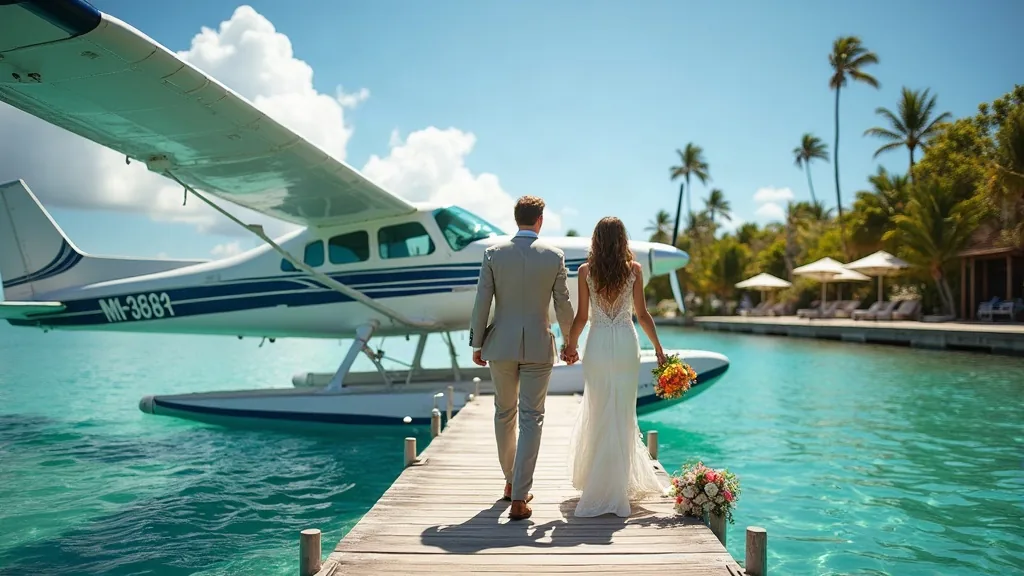
A whole-aircraft photo charter gives your photographer a dedicated seat and an open window for 30-60 minutes over Uluwatu’s cliffs, Tanah Lot, Nusa Penida’s headlands or the South Bali coast. Handheld cameras and gimbals fly freely; drones stay grounded near the aircraft, and any commercial film crew needs a permit arranged before departure.
Couples booking a pre-wedding shoot, an elopement flight or an anniversary re-shoot over Bali’s coastline ask the same question first: is this a scenic joyride with a camera, or a charter built around the shot? It is the second one. Bali Seaplane Charter, the coordination desk of Juara Holding Group (est. 2015), books the whole Cessna Caravan 208 EX Amphibian — not per-seat shares — so the photographer, the couple and one assistant have room to work the windows without other passengers in the frame.
This page covers the photo charter itself: aircraft configuration, timing, what a camera crew can and cannot do in the air, and pricing. If you need airport arrival choreography instead, that sits on a separate page of this site — this one is about the shoot.
Which side of the aircraft faces the coast?
The Cessna Caravan 208 EX Amphibian used for Bali charters seats up to 8, flying from Ngurah Rai International Airport in South Bali, and every seat is a window seat — there is no aisle-only row. For a coastal shoot, the operator plans the route so the cliff or headland sits on one side of the aircraft for a sustained pass, then circles back so the same side gets a second angle at a different sun position. Your photographer should ask for the left or right seat by name once the route is confirmed, not on the tarmac.
A standard South Bali sightseeing sector runs about 50 minutes; a photo charter is usually priced in the same 30-60 minute band, with the extra time going to slower passes and repositioning rather than distance. The aircraft is amphibious, which means it can use both the airport runway and approved water points — but it cannot put down on any beach on request. Every water landing needs prior approval from the operator and local authority, plus a sea state calm enough to execute it safely.
What can the camera do in the air, and what needs a permit?
Most couples want three things from an aerial shoot: handheld stills through the window, a gimbal-stabilized video pass, and — occasionally — a wider aerial sequence for a wedding film. The first two are straightforward inside the cabin. The third usually is not, once a drone or a second aircraft enters the plan.
| Allowed without extra paperwork | Needs a permit or advance clearance |
|---|---|
| Handheld stills through an open or clear window | Drone launch near the seaplane or its landing zone |
| Small gimbal or phone stabilizer, hand-supported | Commercial film crew with tripods/rigs on a beach or resort landing point |
| GoPro-style action camera mounted to a seat rail | A second chase aircraft flying formation for video |
| Audio recording inside the cabin | Filming that identifies a resort, marina or private property without their consent |
Drone use is restricted close to the seaplane during taxi, takeoff, landing and any water touchdown — this is a safety separation rule, not a style choice, and it applies at every landing point the operator uses. If a couple wants ground or drone footage to intercut with the aerial pass, that has to be coordinated as a separate unit working from the water or shoreline, timed around the aircraft’s schedule, and cleared with the site owner in advance. Juara Holding Group’s desk flags this requirement during the quote stage so it does not surface as a surprise on the shoot day.
How is a photo charter priced differently from a scenic flight?
A photo charter is priced on the same rate card as any whole-aircraft charter — there is no separate “photography surcharge” — but couples typically pay for the full aircraft rather than splitting cost per guest, since an empty cabin means clean sightlines for the camera. As of September 2026, one Bali operator’s published rate card lists full aircraft rates for a scenic sector, with per-guest figures also shown for flights shared by a full complement of passengers; airport fees and tax are shown as separate line items on that card. A photo charter with 2-4 people (couple, photographer, assistant) sits closer to the full-aircraft rate than the per-guest split, because you are not filling all 8 seats.
What actually moves the quote: sector block time, whether the route adds a second pass or a water landing at a secondary point, airport and water-base handling fees, positioning flights if the aircraft repositions from another job beforehand, crew duty time, and season. Dry season (April-October) gives calmer water for landings and clearer light for shooting; wet season (November-March) raises the chance of a weather-driven reschedule, and July-August, Christmas-New Year and Easter carry peak-season demand on top of the base rate.
| Option | Typical duration | What is included | Starting basis |
|---|---|---|---|
| Coastal pass — no water landing | 30-40 min | 1-2 scenic passes, Uluwatu/Tanah Lot corridor, up to 4 pax | Full-aircraft charter rate, quoted per date |
| Extended multi-point shoot | 45-60 min | 2-3 coastal segments (e.g. Uluwatu + Nusa Penida), repositioning between | Full-aircraft charter rate + extended block time |
| Photo charter with water landing | 45-60 min + landing window | Coastal pass plus one approved water touchdown for on-water shots | Full-aircraft rate + landing/handling fee, subject to sea state and approval |
All figures above are indicative and date-stamped to September 2026; they move with fuel, season and route, and every quote is confirmed only after Juara Holding Group’s desk checks live availability with the licensed operator.
Can we land for beach shots?
Sometimes, and it is never guaranteed at booking. The aircraft’s amphibious capability opens the option, but a water landing depends on three things lining up on the day: operator sign-off on the specific point, a workable sea state (wind, swell and the midday sea breeze all matter, especially for afternoon legs), and — if the landing point sits near a resort or private stretch of coast — that property’s consent. Couples who want a landing built into the shoot should say so at quote stage, not after the aircraft is airborne, so the desk can check the point against operator approval before confirming the date.
How booking works
- Brief the desk. Send your date window, guest count (couple, photographer, assistant), and whether you want a water landing.
- Route and light check. The desk maps your shot list against sun position and the operator’s approved coastal points, then returns a route and price.
- Quote confirmation. You review the full-aircraft rate, fees and any landing surcharge; the quote is indicative until deposit.
- Deposit and lock-in. A deposit secures the aircraft and crew for your date; balance and final route are confirmed closer to departure, subject to weather.
- Shoot day. Photographer and couple board with the assigned window seats already set; the desk stays reachable for last-minute weather calls.
Book your photo flight
Tell the Juara Holding Group desk your date, photographer count and preferred coastal segments, and the team will check operator availability and return a route-specific quote. Bali Seaplane Charter is an independent coordination desk — it does not own or operate the aircraft, is not affiliated with any named operator, and every quote stays indicative until deposit.
Quote my photo flight: WhatsApp +62 811-3941-4563 or email bd@juaraholding.com.
Frequently Asked Questions
Can the photographer fly separately from the couple to shoot from another angle?
Not on the same aircraft — a whole-aircraft charter is one aircraft with one flight path, so the photographer shoots from inside the cabin alongside the couple. A second aircraft or drone unit working the same shoot has to be arranged and permitted separately, and timed to the seaplane’s schedule rather than flying in formation with it.
Do we need to bring our own camera gear, or can equipment be arranged?
Bring your own gear. The charter provides the aircraft, route and window access; camera bodies, lenses, gimbals and any lighting are the couple’s or photographer’s responsibility. Confirm gear size with the desk in advance — full-frame bodies with long lenses need enough window clearance, which the operator can check against the aircraft’s cabin layout.
What happens if weather cancels the flight on our wedding day?
The operator makes the call based on sea state, wind and visibility, not just rain, and will reschedule rather than fly an unsafe leg. Because this affects a fixed wedding date, book the photo charter for a day or two before or after the ceremony where possible, so a weather hold does not collide with the event itself.
How many people can realistically fit for a comfortable photo shoot?
The aircraft seats up to 8, but a photo charter works best with 2-4 people — couple, photographer, and one assistant — so there is room to move between windows during the flight. Filling more seats is possible but reduces the space each person has to reposition for different angles mid-flight.
Is the indicative per-guest rate (for a full complement of passengers) cheaper than booking the whole aircraft for a photo shoot?
Only if you fill all 8 seats. A photo charter with 2-4 people costs less overall on the full-aircraft rate than on a per-guest split, because the per-guest figure assumes the aircraft is shared at capacity. The desk will quote both ways so you can compare against your actual guest count.